
Silicone Breastplate Cleaning Mistakes: What Not to Use

Quick Answer
Clean a silicone breastplate with lukewarm water, mild soap, a soft towel, and full air-drying. Avoid bleach, alcohol, boiling water, abrasive brushes, washing machines, dryers, direct heat, perfume, and oily lotions because they can weaken the surface, edges, color, or filled areas.
- Use gentle hand-washing after every sweaty or long session.
- Rinse cleaner residue fully; leftover soap can make silicone feel sticky.
- Let it air-dry completely before storing it in a pouch, drawer, or box.
The guide below separates safe cleaning, risky shortcuts, odor fixes, dye transfer, drying, storage, and what to do after a cleaning mistake.
The fastest way to ruin a silicone breastplate is usually not wearing it too often. It is cleaning it too aggressively, storing it before it is dry, or trying to remove sweat and odor with chemicals that were never meant for silicone.
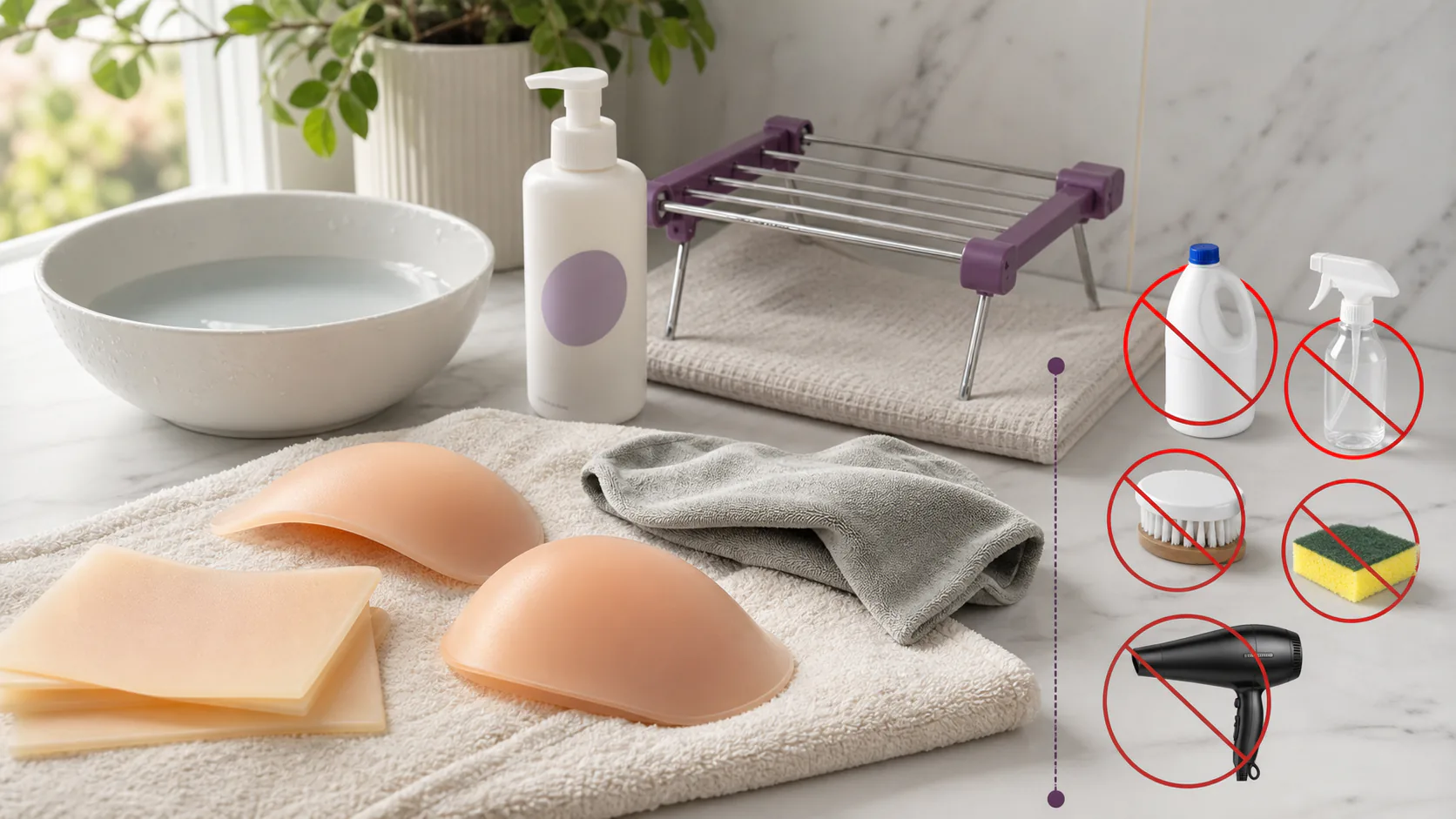
Quick Answer: what not to use
Do not clean a silicone breastplate with bleach, alcohol, harsh detergent, boiling water, abrasive brushes, washing machines, dryers, direct hair-dryer heat, perfume, or oily lotions. Use lukewarm water, mild soap, a soft towel, and full air-drying instead.
- Clean by hand after sweaty or long sessions.
- Rinse fully so soap residue does not leave the surface tacky.
- Let every fold, edge, and filled area dry before storage.
- Keep dark dye, sharp zippers, jewelry, and heat away from silicone.
Why harsh cleaning feels tempting
A breastplate sits close to warm skin, so sweat, body oil, lint, and clothing dye can build up. When the inside feels sticky or smells less fresh, it is natural to reach for a stronger cleaner. That shortcut is where many cleaning mistakes begin.
Silicone needs gentle, repeated care. One careful five-minute routine after each wear protects the surface better than one aggressive rescue wash after several neglected sessions. This is especially true around thin neck edges, underarm edges, and magic-tape contact areas.
The cleaning products to avoid
If a product is meant to disinfect a countertop, whiten laundry, remove grease, strip makeup, or style hair with heat, it is probably too aggressive for a silicone breastplate. The goal is to remove sweat and residue without drying, dulling, stretching, or staining the material.
| Do not use | Why it is risky | Safer choice |
|---|---|---|
| Bleach or strong disinfectant | Can discolor, dry, or weaken the surface | Mild soap and lukewarm water |
| Alcohol wipes or sanitizer | May dull the finish and stress thin edges | Gentle wash, full rinse, air-dry |
| Boiling water | Can affect shape, seams, and filled areas | Lukewarm water only |
| Rough sponge or brush | Can scratch the surface and catch on edges | Soft cloth or clean hands |
| Hair dryer, radiator, dryer | Direct heat can deform or age silicone | Room-temperature air-drying |
| Perfume or oily lotion | Can leave residue, odor mix, or surface tack | Dry completely; store clean |
Safe cleaning routine after wearing
Start by rinsing the inside with lukewarm water. Add a small amount of mild soap to your hands, clean the skin-contact areas gently, then rinse until the surface feels clean and not slippery. Pat with a soft towel instead of rubbing hard.
Drying is part of cleaning. Lay the breastplate in a ventilated place on a clean towel or rack. Do not zip it into a pouch while damp. Damp storage is one of the most common causes of odor, lint sticking, and a disappointing next try-on.
- Wash the inside first, especially under the bust and underarm areas.
- Clean makeup or powder transfer gently before it sets.
- Check magic-tape zones for lint and skin oil.
- Let the neckline and shoulder edges dry flat and relaxed.
Odor, dye transfer, and sticky feel
Odor usually means moisture stayed too long, not that you need perfume. Wash, rinse, and air-dry fully. If the breastplate was stored in a sealed bag while damp, open the bag, let the product breathe, and avoid wearing it again until the inside is fully dry.
Dark clothing dye is harder. Black, red, deep purple, and denim fabrics can transfer color, especially when warm or wet. Wash new clothes before pairing them with silicone, and avoid storing dark garments pressed against the breastplate.
What to do after a cleaning mistake
If you already used alcohol, hot water, or a rough sponge once, do not panic. Stop the harsh method, rinse with lukewarm water, clean once with mild soap, and dry fully. Then inspect the surface in good light.
Watch for permanent tackiness, cloudy patches, tears, edge thinning, color change, or shape collapse. If you see damage, contact support before wearing the product again. If the surface looks normal, return to a gentle routine and keep the next session short.
Build care into your outfit plan
Cleaning is easier when the outfit is planned. If you expect a long or warm session, keep a soft towel, mild soap, and a clean drying area ready before you dress. Pair this article with the sweat and comfort guide and the private storage guide for a complete routine.
Frequently Asked Questions
What should you not use to clean a silicone breastplate?
Avoid bleach, alcohol, strong detergents, boiling water, abrasive brushes, washing machines, dryers, direct heat, perfume, and oily lotions. Mild soap and lukewarm water are safer.
Can alcohol wipes damage silicone breastplates?
Yes. Alcohol can dry or dull silicone over time, especially on thin edges. If you used one once, rinse gently and return to mild soap.
How do I remove odor safely?
Wash with mild soap and lukewarm water, rinse fully, pat dry, and air-dry in a ventilated place. Do not cover odor with perfume.
Can a silicone breastplate go in the washing machine?
No. Machine washing can twist, stretch, crease, or tear silicone. Hand-wash it instead.
What if I already cleaned it the wrong way?
Stop using the harsh method, rinse, clean once gently, dry fully, and inspect for tackiness, color change, tears, or edge damage.
Frequently Asked Questions
What should you not use to clean a silicone breastplate?
Do not use bleach, alcohol, harsh detergent, abrasive brushes, boiling water, washing machines, dryers, direct hair-dryer heat, or oily lotions on a silicone breastplate. Mild soap, lukewarm water, a soft towel, and full air-drying are safer.
Can alcohol wipes damage silicone breastplates?
Yes. Alcohol can dry or dull silicone surfaces over time, especially around thin edges. If you used one once, rinse gently with lukewarm water and mild soap, then dry fully and watch for stickiness or surface changes.
How do I remove odor from a silicone breastplate safely?
Wash the inside with mild soap and lukewarm water, rinse fully, pat dry, and let it air-dry in a ventilated place. Do not seal damp silicone in a bag or try to cover odor with perfume.
Can I put a silicone breastplate in the washing machine?
No. Machine washing can twist, stretch, crease, or tear silicone. Hand-washing gives better control around the neckline, underarm edges, and filled cup areas.
What should I do if I cleaned a breastplate the wrong way?
Stop using the harsh product, rinse with lukewarm water, clean once with mild soap, dry fully, and inspect the surface. If you see tears, tackiness, color change, or edge damage, contact support before wearing it again.
About the Author
Jun
Product Specialist & Content Writer, CrossdressForm
Jun is a product specialist and lead content writer at CrossdressForm. With five years of hands-on experience in silicone body-shaping products, Jun has helped thousands of crossdressers, transgender women and drag performers choose breastplates, hip enhancers and bodysuits that actually fit. Jun's guides focus on practical sizing, realistic wear tips and first-time buyer confidence, always from the perspective of real-world wear rather than spec sheets.


Leave the first comment
Be the first to share your thoughts. Comments help our community feel seen.