
Crossdresser Breastplate Skin Tone Guide: Ivory, Beige, Light Brown, or Brown?

Quick Answer
Choose the silicone breastplate color that matches the skin people will actually see beside it, not the shade of your face makeup. For most crossdressers, that means comparing the breastplate against the neck, collarbone, arms, and hands in daylight before deciding.
- Use Ivory or Beige if your neck and arms look light in daylight; compare Light Brown or Brown if your skin reads warmer or deeper.
- High-neck breastplates need a closer color match because the silicone sits beside the neck and jawline.
- Round-neck breastplates are more forgiving because clothing can cover more of the transition.
- If you are between two tones, choose the one closest to your neck and arms, then use clothing and accessories to soften the edge.
The guide below walks through Ivory, Beige, Light Brown, and Brown with practical checks for daylight, outfits, makeup, and neckline choice.
If you are choosing your first silicone breastplate, color can feel strangely stressful. The product photos may look clear, but once you imagine the breastplate beside your own neck, arms, hands, makeup, and favorite outfit, the decision becomes more personal. This guide keeps it practical: choose the color that will be seen next to the breastplate in real life.
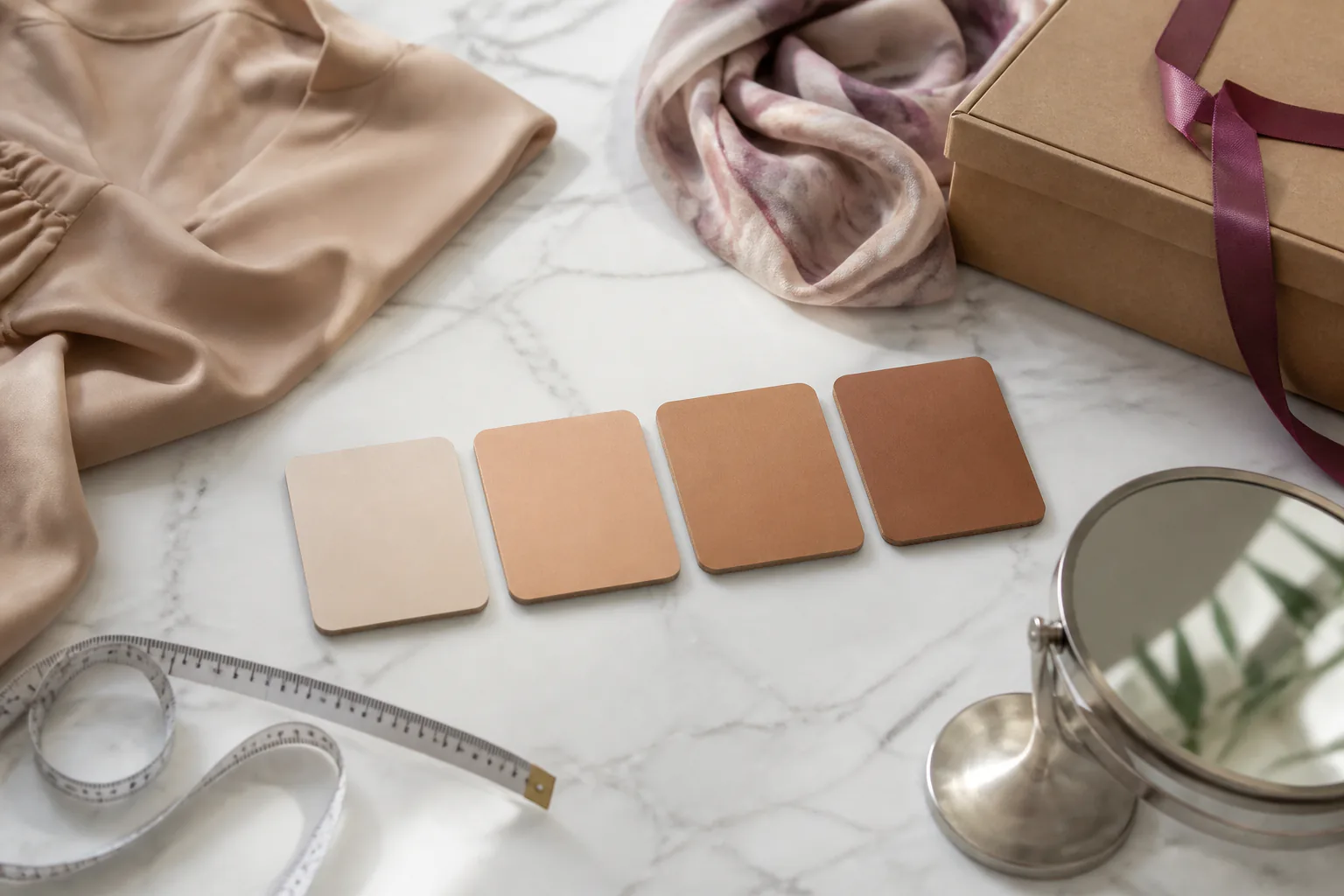
Quick Answer: match the skin people can see
Choose the silicone breastplate color that matches the skin people will actually see beside it, not the shade of your face makeup. For most crossdressers, that means comparing the breastplate against the neck, collarbone, arms, and hands in daylight before deciding.
- Use Ivory or Beige if your neck and arms look light in daylight.
- Compare Light Brown or Brown if your skin reads warmer, deeper, or more golden.
- High-neck breastplates need a closer color match because they sit near the neck and jawline.
- Round-neck breastplates are more forgiving because clothing can cover more of the transition.
Why skin tone matters more than beginners expect
Most first-time buyers focus on cup size first. That makes sense, but skin tone often affects whether the result feels calm or distracting. A breastplate can be the right size and still feel wrong if the color jumps away from your neck or hands.
The goal is not to create a perfect medical color match. Silicone, human skin, makeup, and fabric all reflect light differently. The goal is to get close enough that your clothing and accessories do the rest of the work.
Ivory, Beige, Light Brown, and Brown compared
Use this as a practical starting point. Your room light, camera, and clothing can shift the result, so treat the table as a fitting guide rather than a final rule.
| Color | Best for | What to check | Beginner note |
|---|---|---|---|
| Ivory | Light or cooler skin tones | Neck and inner forearm in daylight | Can look too pale under warm yellow light |
| Beige | Light-to-medium warm skin tones | Arms, hands, and collarbone | Often the safest first choice for many shoppers |
| Light Brown | Medium or golden skin tones | Outdoor light and dress neckline | Useful when Beige looks washed out |
| Brown | Deeper or richer skin tones | Neck, hands, and full outfit contrast | Best when lighter colors look obviously separate |
Match your neck and arms before your face
Your face can change a lot with foundation, powder, beard cover, contour, and lighting. Your neck and arms usually change less. If your breastplate sits beside the neck, the neck becomes the main reference. If your outfit shows arms or hands, those areas matter too.
A simple test helps: place a similar skin-tone fabric or product photo near your neck and forearm in daylight. If one color looks natural beside both areas, that is usually safer than a color that only works with face makeup.
High-neck vs round-neck color tolerance
A high-neck silicone breastplate gives smoother upper-chest coverage, but it also puts silicone closer to the neck and jawline. That means color mismatch has fewer places to hide. High-neck styles work best when the color is close and the outfit includes a scarf, choker, collar, or higher neckline.
A round-neck breastplate is more forgiving for first-time buyers. The edge sits lower, so tops, cardigans, blouses, and dresses can cover more of the transition. If you are nervous about color, a round-neck style often gives you more room to learn.
Lighting changes everything
Bathroom light can make silicone look shinier. Phone flash can make it look lighter. Warm indoor bulbs can make Beige look more peach and Ivory look cream. Daylight is the best first check because it shows color differences honestly.
Before judging the color, wear the outfit you actually plan to use. A black sweater, pale blouse, red dress, or scarf can change how the breastplate reads. Color matching is not a product-only decision; it is a full outfit decision.
Small fixes when the color is close but not perfect
If the color is close, you often do not need to replace the product. Use medium-weight fabric, a collar, scarf, necklace, cardigan, or a slightly higher neckline to soften the transition. For photos, avoid direct flash and use softer side light.
Makeup can help around the neck and face, but avoid heavy makeup directly on silicone unless the product instructions allow it. Oils, pigments, and harsh removers can shorten the life of silicone.
- Use a scarf or choker for high-neck styles.
- Choose medium-weight clothing instead of thin white stretch fabric.
- Check the color while standing, sitting, and turning your head.
- Do not judge only from one mirror or one photo.
Buyer checklist
Before ordering, write down your main outfit: neckline, sleeve length, color, and fabric thickness. Then choose the breastplate color that gives the outfit the easiest path to looking natural.
- Compare against neck, arms, and hands.
- Check daylight and warm indoor light.
- Choose round-neck if you want more clothing flexibility.
- Choose high-neck only when the color and neckline plan are strong.
- When unsure, ask support with your intended outfit and skin tone concerns.
Frequently Asked Questions
Which silicone breastplate skin tone should I choose first?
Choose the color that matches the skin visible beside it: neck, collarbone, arms, and hands. Do not choose only by face makeup.
Should a breastplate match my face or my neck?
Match your neck and upper chest first. Foundation can change your face, but the breastplate usually sits beside your neck, arms, and hands.
What if I am between Ivory and Beige?
Compare both in daylight beside your neck and inner forearm. Ivory suits cooler lighter skin; Beige is safer when your skin looks warmer.
Does a high-neck breastplate need a closer color match?
Yes. High-neck styles sit close to the neck and jawline, so mismatch is easier to notice than with round-neck styles.
Can makeup fix a silicone breastplate color mismatch?
Makeup can soften a small mismatch, but clothing, scarves, collars, and lighting are usually more reliable.
What lighting should I use to check breastplate color?
Check daylight first, then normal indoor light and the actual room where you plan to wear the outfit.
About the Author
Jun
Product Specialist & Content Writer, CrossdressForm
Jun is a product specialist and lead content writer at CrossdressForm. With five years of hands-on experience in silicone body-shaping products, Jun has helped thousands of crossdressers, transgender women and drag performers choose breastplates, hip enhancers and bodysuits that actually fit. Jun's guides focus on practical sizing, realistic wear tips and first-time buyer confidence, always from the perspective of real-world wear rather than spec sheets.




Leave the first comment
Be the first to share your thoughts. Comments help our community feel seen.