
Custom Silicone Breastplates: A Complete Guide to Made-to-Order Forms
Quick Answer
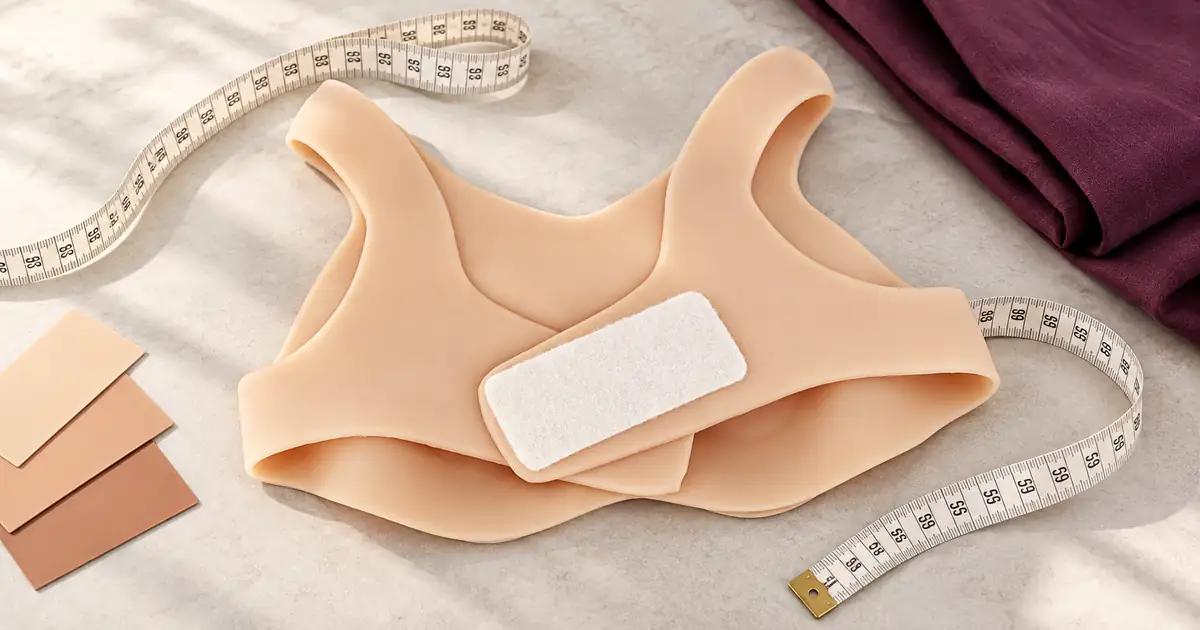
A complete guide to custom silicone breastplates — sizing, neck measurement, skin tone matching, production time, cost, and common mistakes to avoid.
- Measure your band size around the ribcage
- Choose your cup size preference
- Measure your shoulder width across the back
- Measure your neck circumference at the base
If you've ever typed "custom breast plates" into Google, you're probably looking for something that fits you — not a one-size-fits-all solution. Off-the-shelf breast forms work for many people, but if your band size, neck size, or skin tone falls outside the standard range, custom may be the only option.
This guide covers the full process: what custom means, how to measure, what it costs, and how long it takes. It also covers the mistakes that lead to wasted money and disappointing results.
What Does "Custom" Actually Mean?
Custom silicone breastplates fall into three categories:
- Made-to-order sizing — You provide measurements, the manufacturer selects the closest base mold and adjusts the cup size, band width, or neck opening.
- Full custom mold — A new mold is created from your measurements. This is the most expensive and time-consuming option, usually reserved for people with significant asymmetry or very specific requirements.
- Color and finish customization — The shape is standard, but the skin tone, nipple color, areola size, and surface texture are matched to your specifications.
Most people who search for "custom breast plates" actually need the first or third option. Full custom molds are rare and often overkill.
Why Custom Matters for Crossdressers and Trans Women
Standard breast forms come in a limited range of sizes and tones. If you have broad shoulders, a large band size, a thicker neck, or a deeper skin tone, off-the-shelf options may look disproportionate or fail to blend with your skin.
A recurring frustration in r/crossdressing: standard breastplates often either choke the neck or float off the chest. When users find a band that fits a 42-inch chest, the cups are automatically E or F — but they just want a natural C cup on a wider frame.
Custom sizing solves that problem by matching the form to your frame — not the other way around.
How to Measure for a Custom Breastplate
You'll need four measurements. Use a soft tape measure, wear a fitted shirt, and stand relaxed.
1. Band Size
Wrap the tape around your ribcage, just under where the breastplate will sit. Keep it snug but not tight. Write down the number in inches or centimeters.
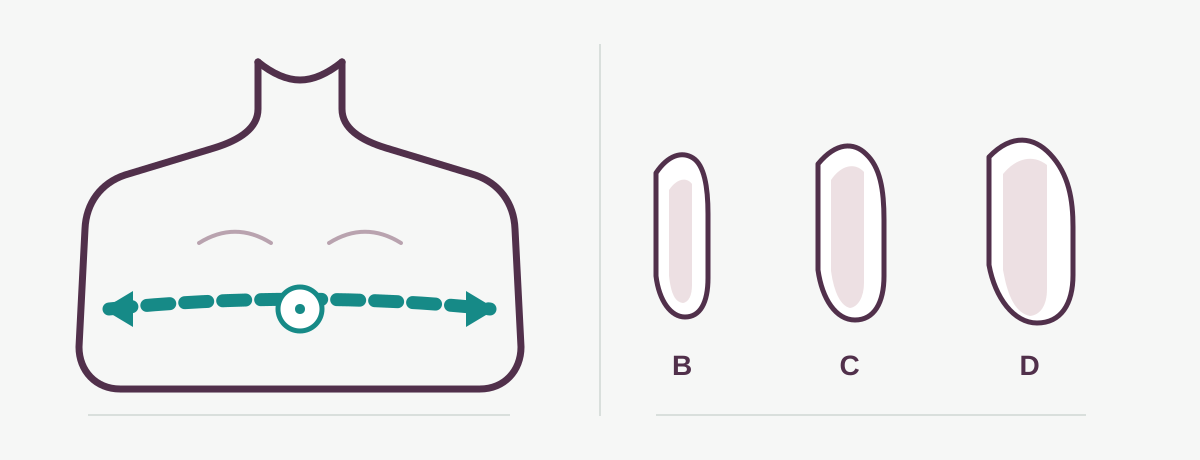
2. Cup Size Preference
This isn't your bra size — it's the visual volume you want. If you're unsure, start with a B or C cup and adjust from there. Custom manufacturers can often scale the cup up or down without changing the band.
3. Shoulder Width
Measure from the edge of one shoulder to the other, across your back. This determines how the breastplate sits on your frame. Broad shoulders need wider straps or a higher neckline to avoid slippage.
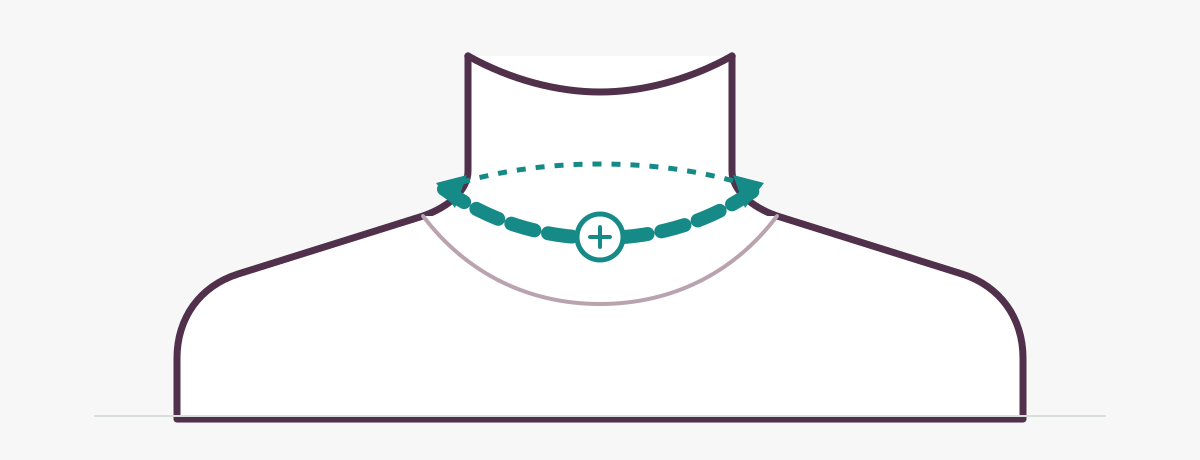
4. Neck Circumference
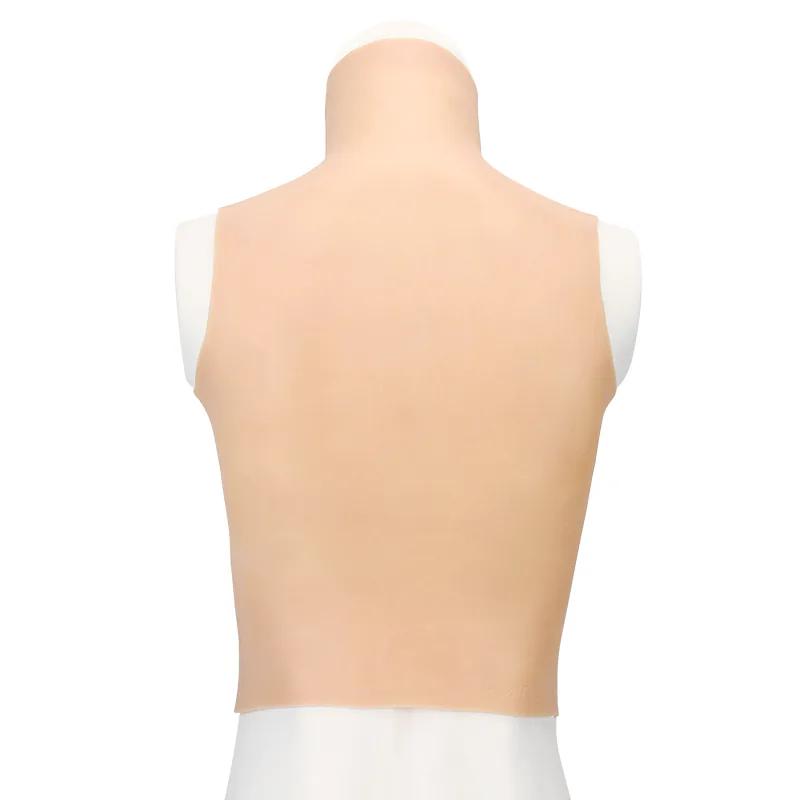
Measure around the base of your neck, where the breastplate edge will sit. An ill-fitting neck opening is one of the most common sources of discomfort — too tight causes a choking sensation; too loose lets the edges roll up and show. Custom neck sizing ensures the silicone edge blends seamlessly under a collar or choker.
For a deeper look at sizing, see our breastplate size guide.
Skin Tone Matching
Custom breastplates can be matched to your skin tone in two ways:
- Standard tones — Most manufacturers offer 4-6 pre-set tones: Ivory, Beige, Light Brown, Brown, and occasionally deeper shades. If you're between tones, go one shade darker.
- Full color match — You send a photo of your skin under natural lighting, and the manufacturer mixes a custom silicone batch. This adds cost and production time.
For most people, the standard tones work well. If you have a very specific undertone (cool, warm, olive), full color match may be worth it.
See our skin tone guide for more details.
Production Time and Cost
Custom orders take longer and cost more than off-the-shelf forms. Here's what to expect:
| Type | Production Time | Price Range (USD) | |
|---|---|---|---|
| Made-to-order sizing | 2-4 weeks | $200 - $400 | Most Popular |
| Color/finish customization | 3-5 weeks | $300 - $600 | |
| Full custom mold | 6-10 weeks | $800 - $2,000+ |
Quick summary: most buyers spend between $200 and $400 for made-to-order sizing, which takes about 2 to 4 weeks.
Prices vary by manufacturer, cup size, and material (medical-grade silicone costs more than standard silicone). Always ask for a written quote before committing.
Common Mistakes to Avoid
- Measuring over clothing — Always measure against bare skin or a thin fitted shirt.
- Skipping the neck measurement — This is the most common source of discomfort. A neck that's too tight is unwearable; too loose and the edges show.
- Guessing your cup size — If you're unsure, order a cheaper standard form first to test the visual volume.
- Ignoring shoulder width — A breastplate that's too narrow will slip; too wide will bunch.
- Skipping the patch test — If you have sensitive skin, ask for a small silicone sample before the full order.
- Not asking about returns — Custom items are often non-refundable. Confirm the policy before paying.
Once you have your custom form, proper cleaning matters as much as the initial fit. See our guide on how to clean silicone breast forms for a 5-minute daily routine.
Frequently Asked Questions
How do I know if I need a custom breastplate?
If standard sizes don't fit your band, cup, neck, or skin tone — or if you have significant asymmetry — custom is worth considering. If you're between two standard sizes, try the larger one first.
Can I return a custom breastplate?
Most manufacturers do not accept returns on custom orders. Always confirm the return policy in writing before placing an order.
How long does a custom breastplate last?
With proper care, a medical-grade silicone breastplate can last 1-2 years or more. Custom forms are no different — cleaning and storage matter more than the custom process itself.
Is custom more comfortable?
Not necessarily. Comfort depends on the material, weight, and how well the form matches your frame. Custom sizing improves fit, but material choice affects comfort just as much.
Still Not Sure?
If you're unsure whether custom is right for you, start with a standard size and see how it feels. Our shop carries a range of breastplates in standard sizes, and we offer free sizing consultation via Telegram.
About the Author
Jun
Product Specialist & Content Writer, CrossdressForm
Jun is a product specialist and lead content writer at CrossdressForm. With five years of hands-on experience in silicone body-shaping products, Jun has helped thousands of crossdressers, transgender women and drag performers choose breastplates, hip enhancers and bodysuits that actually fit. Jun's guides focus on practical sizing, realistic wear tips and first-time buyer confidence, always from the perspective of real-world wear rather than spec sheets.


Leave the first comment
Be the first to share your thoughts. Comments help our community feel seen.